
It’s a pleasure to share that our Founder and President, Alessandro Bisagni, served as a facilitator at the 2026 ULI Asia Pacific Summit, leading the ULI Minds session Nature-Positive Real Estate: Integrating Biodiversity and Biophilic Design on Tuesday 26 May at the Shangri-La Qiantan in Shanghai.
ULI Minds doesn’t run like a panel. No slides, no broadcast delivery. Around 20 practitioners in a room, multiple facilitators, and 50 minutes to actually work through something. Alessandro co-facilitated alongside Giovanni Cossu, Head of Sustainability at CapitaLand Development, and Ethan Yao, Deputy General Manager and Chief Architect of the Mixed-use Design Management Department at China Resources Land.
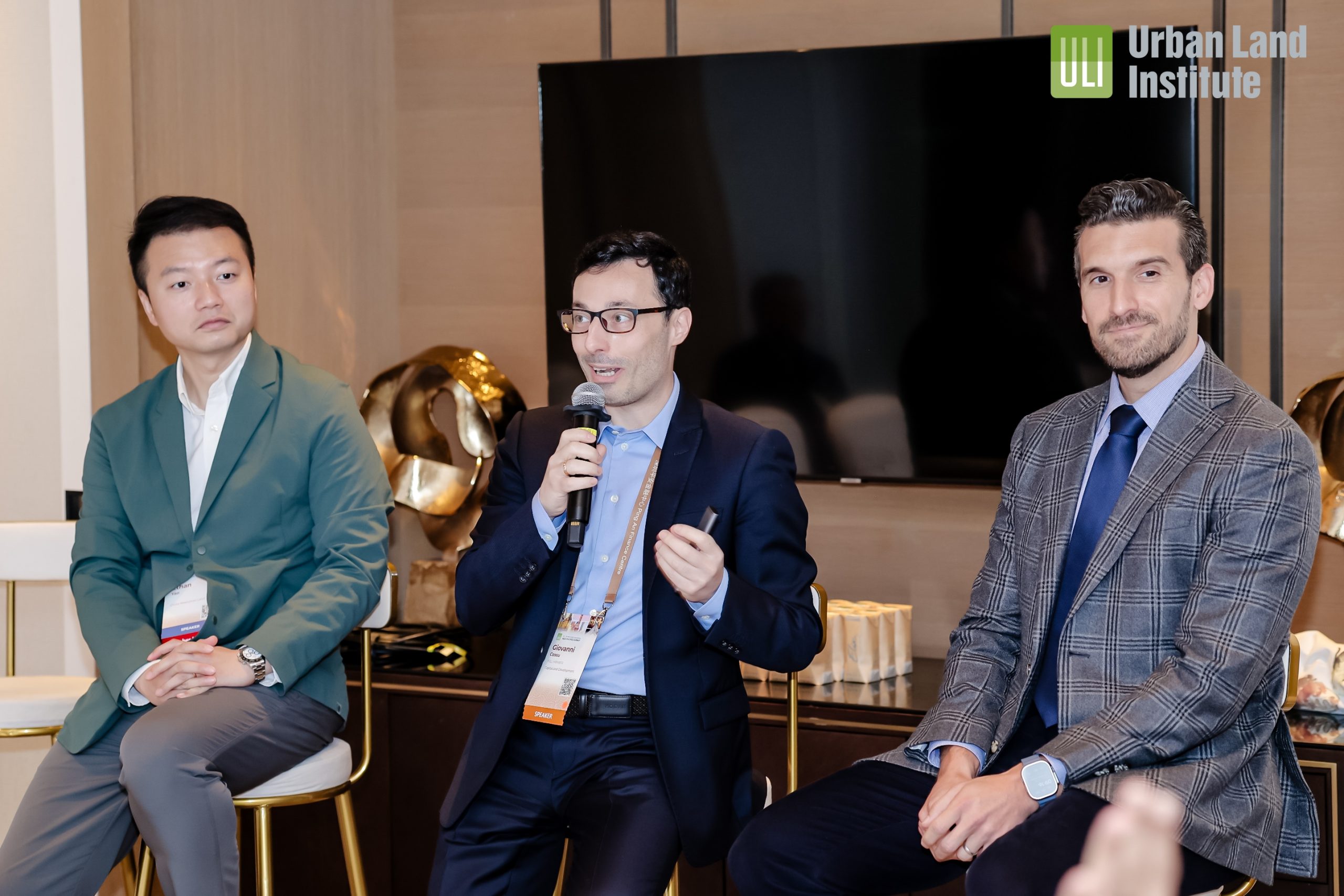
Ethan Yao (China Resources Land), Giovanni Cossu (CapitaLand Development), and Alessandro Bisagni (BEE Incorporations) at the ULI Minds session · Shanghai · May 2026
Biophilic design ≠ biodiversity
The conversation kept coming back to one gap: the difference between biophilic design and biodiversity. They are not the same thing, and the confusion has real costs — in building performance, in occupant outcomes, and in the way, investors are beginning to question nature claims that can’t be verified.
In Alessandro’s words:
“A key point that came out of the ULI Minds session that stuck with me is that biophilic design does not equal biodiversity. A green wall with five species is biophilic but ecologically dead. A real biodiversity strategy uses native, climate-appropriate species that support complex food webs and ecological function. When executed well, this approach delivers measurable benefits: healthier built environments and demonstrable uplift in property value.”
– Alessandro Bisagni, Founder and President and BEE Incorporations
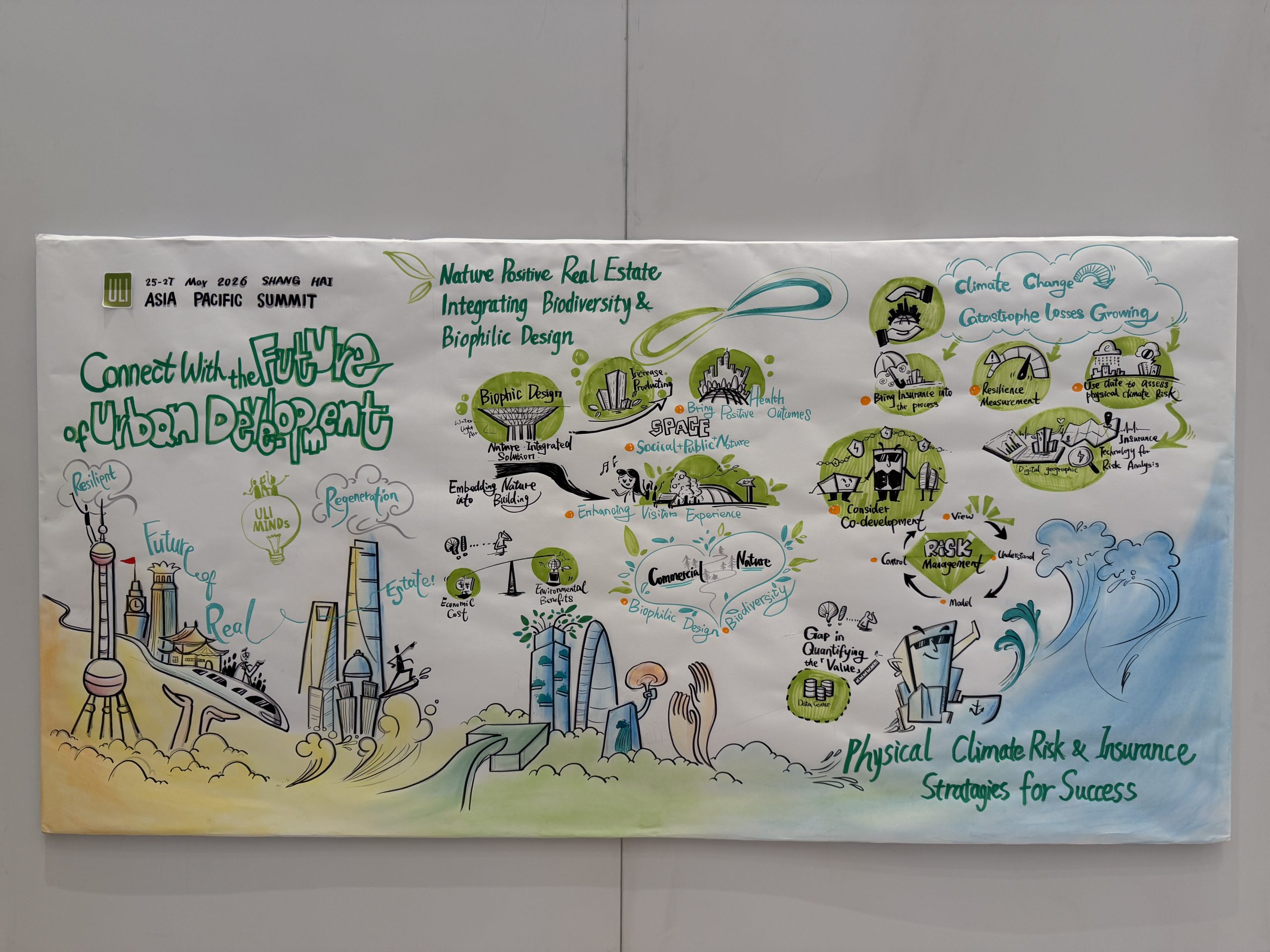
Graphic recording — Nature-Positive Real Estate: Integrating Biodiversity and Biophilic Design · 2026 ULI Asia Pacific Summit · Shanghai · May 2026
The graphic recorder’s board captured what was in the room: the economics of nature integration in buildings, the difficulty of putting a commercial number on biodiversity, blue-green infrastructure, physical climate risk, and how species diversity connects to occupant health. The ULI Minds format runs off the record — the visual is the summary, not a transcript.
Shanghai
BEE was founded here in 2009. Our global headquarters is still here. This year’s Summit — Connect With the Future of Urban Development — ran 25–27 May and drew 700+ practitioners from real estate, finance, planning, and technology. Seventeen years of work in the same city gives you something concrete to bring to a room like that.
About the Urban Land Institute
Founded in 1936, the Urban Land Institute (ULI) is a global non-profit focused on responsible land use and city-building. It has more than 48,000 members worldwide, with over 3,000 across Asia Pacific. BEE has been a member of ULI Asia Pacific for several years; our team was at the 2025 Summit in Hong Kong before returning to Shanghai this year.
Thank you to ULI for the platform.
See you next year!